
A small, family-run newspaper in rural Oklahoma took on the county’s most powerful law enforcement office. What followed was a story of alleged corruption, intimidation and a secret recording in which local officials appear to discuss killing and burying the journalists investigating them.
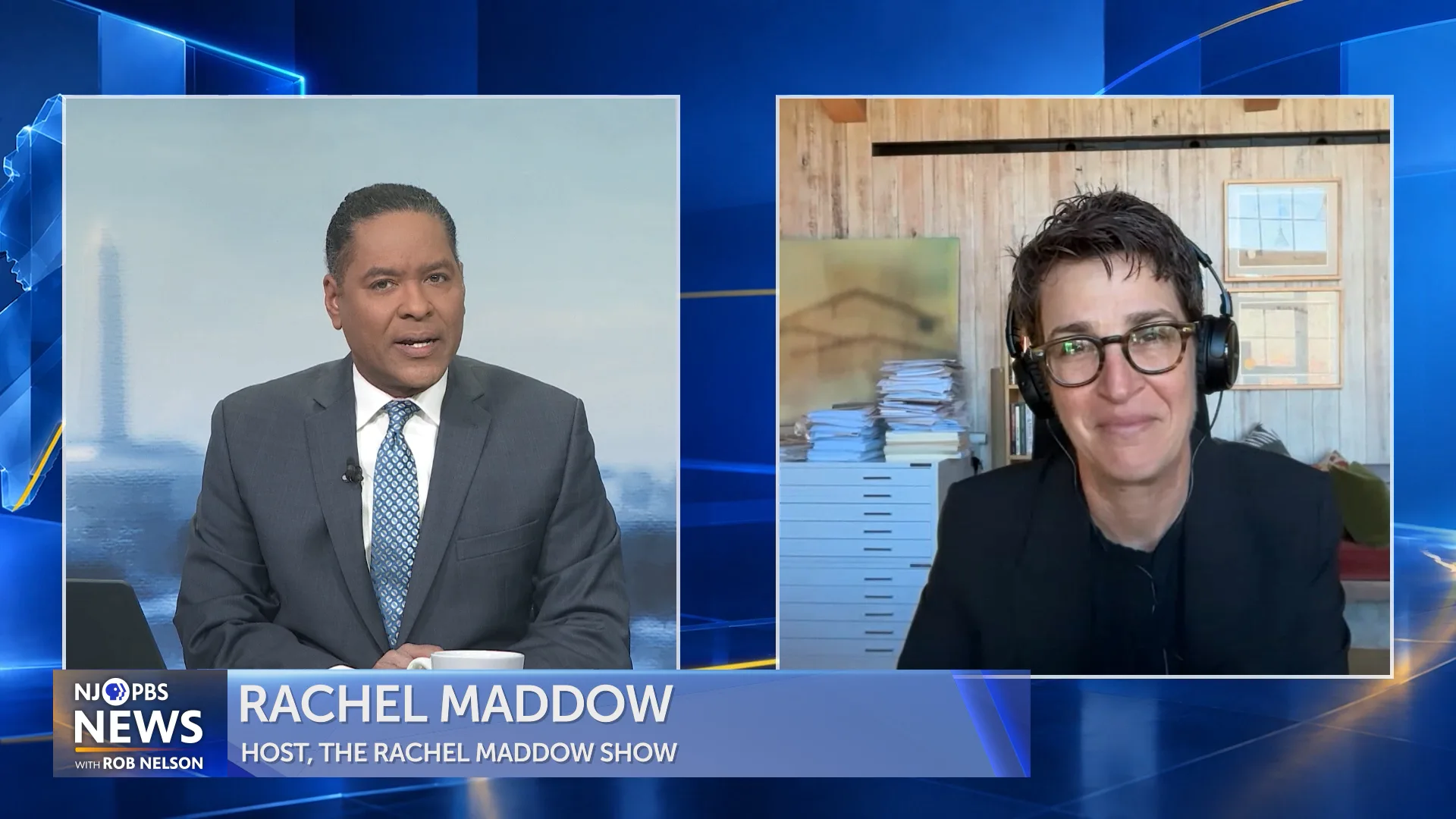
The story is at the center of Kill. Bury. Print., a new documentary produced by journalist and MS NOW host Rachel Maddow and directed by Ben Klein.
Maddow and Klein recently received the David Carr Award for Truth in Non-Fiction Filmmaking at the Montclair Film Festival.
Transcript:
[00:00:00.100] Rob Nelson: It starts with a small family run newspaper in rural Oklahoma taking on the most powerful law enforcement office in that county. What follows pretty much turns into a thriller. Allegations of corruption, intimidation, and even a secret recording of local officials apparently talking about killing and burying the journalists investigating them.
[00:00:22.100] That story's at the center of Kill. Bury. Print. It's a new documentary produced by TV host Rachel Maddow and directed by Ben Klein. The film follows the McCurtain Gazette-News and the extraordinary price that one family paid for refusing to back down, for doing their job.
[00:00:37.940] It also delivers a powerful warning about what communities stand to lose when local journalism disappears.
[00:00:46.160] Documentary trailer: McCurtain County has 33,000 people. It's very much an outlaw culture, and there's some pride in that.
[00:00:52.920] Documentary trailer: If you grew up here, you'd know.
[00:00:55.480] Documentary trailer: In 2016, Kevin Clardy was elected sheriff. We began getting allegations of violence. If officers do something that's against the law, we're gonna write about it. Flagrant racism. Withholding crime reports. The largest jail break in county history. It was a complete madhouse.
[00:01:13.600] Documentary trailer: The administration under Kevin Clardy may be the most corrupt law enforcement agency I've witnessed.
[00:01:20.320] Documentary trailer: These stories really got him angry, and they were spending a great deal of time trying to retaliate against us.
[00:01:27.580] Documentary trailer: It's a literal pissing contest. In McCurtain County, if you make enemies with the sheriff's office, you probably shouldn't drive home at night.
[00:01:36.340] Documentary trailer: Usually you get threatened to be sued, but this escalated way beyond those things. I knew they didn't like us. I had no idea they would talk about killing us.
[00:01:47.100] Rob Nelson: Maddow and Ben Klein recently received the David Carr Award for Truth in Nonfiction Filmmaking at the Montclair Film Festival. Rachel Maddow joining us now. Rachel, thank you so much for being generous with your time. Welcome to NJ PBS News. Speaking of local journalism, you're here at PBS News, so.
[00:02:04.600] Rachel Maddow: Indeed, yes. Yes.
[00:02:05.840] Rob Nelson: It, it, it fits. It fits. Um, I, I watched it last night. I'm not just saying that because we're on camera. Uh, it, it, it was riveting from start to finish. Uh, just as a human tale and as a member of the media, it, it hit home in a lot of ways. How did this get...
[00:02:21.700] Rob Nelson: Obviously, it was a national news story at the time once those tapes came out. How did it then go from this major news story to, "Ooh, we gotta turn this into a 90-minute documentary," obviously did it with much success?
[00:02:33.740] Rachel Maddow: Well, Rob, th- first of all, thank you so much for having me. Thank you for watching the film. Um, I was one of the national media, um, anchors who covered this when it happened in 2023. And, um, it just stuck with me because, uh, one of the things that was sort of unexpected about this story is that after the threats against the journalists were exposed, after we learned about the sheriff talking about killing and burying the family that ran the local newspaper, the sheriff stayed in office.
[00:03:04.420] Rachel Maddow: Um, local officials and even state officials in Oklahoma called for him to step down. Some peoples talk... Some people in the county stepped down, but the sheriff stayed. And so it struck me as just a profoundly dangerous moment for that brave little paper.
[00:03:21.200] Rachel Maddow: And I just sort of kept up on it, and the story wouldn't let me go.
[00:03:25.660] Rob Nelson: Yeah.
[00:03:26.240] Rachel Maddow: And then I learned that Ben Klein had, um, gone to Oklahoma, spent a lot of time in Oklahoma, and persuaded the Willingham family to talk to him. And I'm a huge fan of Ben's. He's an amazing young documentary filmmaker. And when he came to me with the fact that they had access to this story, I just knew that, I knew that we needed to do it.
[00:03:46.980] Rob Nelson: Oh, absolutely. And, and, and well worth the time. And listen, for folks who haven't seen it, I, I don't wanna spoil too much at all, but it, it goes through everything, and it just escalates and builds. And there's one point of it where I felt like, "Okay, that's some justice.
[00:04:03.040] Rob Nelson: I, I feel good about humanity." And then the last 10 minutes- ... I kinda sobered up from that a little bit, uh-
[00:04:12.320] Rachel Maddow: Yeah
[00:04:12.340] Rob Nelson: ... because it really got in, they were doing the right thing, they were doing their job, but it cost them a hell of a lot. And there was a, this, you know, heartbreaking part where the son, uh, the, the main reporter, Chris, kinda said something, and I'm, I'm paraphrasing here, he said, "At the end of this, I was darker and more cynical because my belief-
[00:04:33.840] Rachel Maddow: Yeah
[00:04:33.900] Rob Nelson: ... was gone that if you do the right thing, everything just works out." And it didn't for him in some ways. And then I wonder, was it the intent to, to pull hope from this, or was the intent to be clear-eyed about what the fight for right can sometimes really mean even if you're on the good side?
[00:04:53.560] Rachel Maddow: Yes. The answer is yes. That's exactly what it was. The idea here is to portray not just the heroism, but the importance of what this local paper is doing, how... I mean, imagine what was g- what was going on there in McCurtain County without somebody reporting on it.
[00:05:10.900] Rachel Maddow: I mean, even just think about, I mean, the, the law enforcement stuff that they exposed. For example, one of the things they exposed was the evidence room being in complete disarray, which is an important thing legally for all of the criminal cases there. Um, another thing they exposed was the sheriff's department apparently not working on a number of missing persons cases.
[00:05:27.760] Rachel Maddow: I mean, there's all of these really consequential things that they did. And so it's both heroic and consequential what they're doing. But it is also clear-eyed that, about the fact that when we ask people to take risks to do this kind of work, those risks are not theoretical.
[00:05:44.220] Rachel Maddow: You know, you can really ruin your life doing stuff like this. And it is a dark film in many ways.
[00:05:49.660] Rachel Maddow: Um, it is a true crime story. Um, but for me, I feel like when we're at a moment as a country and as a profession asking people to be really brave- We gotta be clear about the fact that when you're asking people to be brave, you're also asking people to incur pain and loss
[00:06:06.652] Rachel Maddow: ... in their lives, and we gotta be real about that, and we gotta support people when they do it. Um, so it's a, it's a sober story in that way.
[00:06:15.372] Rob Nelson: Absolutely, and real with the idea about the risks they take, but also why some people don't take that route, because they don't- Yes
[00:06:22.992] Rob Nelson: ... they don't wanna risk it. They don't want the wrath. Uh, and they kind of become bystanders, and not in the, in, in the arena. It was devastating when Chris' wife said
[00:06:33.112] Rob Nelson: ... "We love this town, and I thought they'd love us back," something to that effect. And I just went, "Oh." But let me... I, I gotta go to this part too, because this to me, this is, is when I had to pour another cocktail. I would... And, and like, it... I'll be honest.
[00:06:49.592] Rob Nelson: It, this was the moment, and, and this, I want you to speak to this part, and then what it really means in the context of where we are in this country.
[00:06:57.372] Rachel Maddow: Okay.
[00:06:57.492] Rob Nelson: The former deputy, okay? His name was, uh, John Maurer. So he used to work for this corrupt sheriff. We get to the end of all of this. It's all played out, and his quote was, "For some reason, they believed the tapes.
[00:07:14.172] Rob Nelson: They believed the stuff the paper was printing. They bought into it. I think The Gazette had a lot to do with misleading the people. Sometimes I wish McCurtain would just burn to the ground." I thought, "My God, there's the problem," because it doesn't matter what the truth is.
[00:07:33.272] Rachel Maddow: Yes.
[00:07:33.352] Rob Nelson: Some people don't wanna hear it, won't accept it, and rather burn it all down than to hear the other side. Yes.
[00:07:40.092] Rob Nelson: And that plays out in this country. What do we do with that?
[00:07:46.172] Rachel Maddow: You know, Rob, I'm really glad that you zoomed in on that. Um, and it's interesting. I've done a lot of interviews about this film, and nobody else has pulled that moment, but that moment is also gut-wrenching for me. Mm.
[00:07:56.152] Rachel Maddow: Because in that moment, you've got somebody who is siding with the sheriff, who's a loyalist of the sheriff, who doesn't wanna believe anything bad about the sheriff, and so just decides the problem is the press. The problem is, um, the truth. Um, and that is so tempting, and such a cheap and cheerful way to go through life.
[00:08:17.732] Rachel Maddow: And there are a lot of politicians in our country who are really stoking, um, those kinds of fires, saying, you know, "If you don't like what you're hearing, you should be mad at the person who is telling it to you." You know, shoot the messenger.
[00:08:29.832] Rachel Maddow: But, y- y- you know, we are in a, we are in a moment in this country where we are, you know, three local papers are closing every week.
[00:08:38.292] Rob Nelson: Wow.
[00:08:38.452] Rachel Maddow: Um, last year in this country, um, six counties became news deserts without a single source of local news. That was last year, six counties. This year it was 26 counties. The acceleration in the, um, in, in the business failings of local news is a democratic crisis.
[00:09:00.452] Rachel Maddow: It's a small D democratic crisis. And you know, Bruce Willingham, the head of the paper, the dad, um, says at the very end of the film, you know, "I'm worried about what's gonna happen in small-town America because-"
[00:09:11.512] Rob Nelson: Yeah
[00:09:11.592] Rachel Maddow: "... corrupt people will always run for office-"
[00:09:13.872] Rob Nelson: Yeah
[00:09:13.932] Rachel Maddow: "... and we've gotta tell the truth about them."
[00:09:16.112] Rob Nelson: Mm.
[00:09:16.272] Rachel Maddow And I just thought, "My God, that is the bare truth of it."
[00:09:19.712] Rob Nelson: Yeah. And look, as a former newspaper guy, that, that part hit home too. I worked in New Orleans for years, saw a lot of interesting things. I've, I've been in towns, uh, like the, like the one in this documentary. Uh, it really was fascinating. I encourage everyone to go watch it. Let me also just switch gears.
[00:09:35.412] Rob Nelson: I don't have too much time left. Uh, you have a new book coming out, 'cause you just don't do enough. You don't contribute enough- ... to the media. You, you're n- you're never working on anything. I don't know what you do with all your free time. Uh, but this book, uh, about the Department of Justice, um, I would argue equally dark, but the word collapse, uh, is in the title, and I just
[00:09:55.612] Rob Nelson: ... that's a heavy word in any sentence, let alone the DOJ of the United States of America. Can you give me what you think is the most impactful or egregious example that supports the claim that that department is in collapse, and is it fixable?
[00:10:15.772] Rachel Maddow: I do think we're gonna have to refound, not just rebuild, but refound a number of our most important democratic institutions so that they're more resilient, so that they don't fall apart again. Um, and so Department of Fate is a little bit of a history as to when the Department of Justice has been heroic, and also when they have been terrible.
[00:10:34.832] Rachel Maddow: Um, but it is also the story about how they are basically gone now. The Department of Justice essentially closed down the Public Integrity section. They essentially closed down the National Security division. They essentially closed down the Tax division. Thousands of lawyers and other DOJ personnel have left, and they haven't been replaced, and I think that is ominous.
[00:10:53.412] Rachel Maddow: I think that is, um, the kind of thing that happens in a country where your rulers don't want a building full of lawyers telling you you can't do things. Um, but I think that it's, it's a really consequential institution that needs to be the first thing that we refound, and we need to be really serious about the fact that it's as consequential as it is.
[00:11:15.092] Rob Nelson: Mm. Do you imagine that if there is a changing of the guard, uh, in DC, that, that whoever sits in that big chair next can do it? Or is that something that can burn down in, in, in 10 minutes but takes 10 years to rebuild?
[00:11:30.512] Rachel Maddow: Yeah. That's the question for so many of the institutions of our government that have been essentially dismantled, in public health, in the military-
[00:11:38.592] Rob Nelson: Mm
[00:11:39.252] Rachel Maddow: ... in the Department of Justice. Um, so m- the, our research structure, our basic science stuff. It's so much stuff has been dismantled, and it does, as you say, take five minutes to burn it down and, you know, maybe five generations to build it back up. But, um, we have to start thinking about it now.
[00:11:56.292] Rachel Maddow: I do think that a Democratic Congress, um, is prioritizing two things In case they get control of the Congress again, I think they're control... they're prioritizing accountability for crimes committed and corruption in the, um, in the administration, and also trying to make people's lives better, particularly the cost of living issues, which are so terrible.
[00:12:15.356] Rachel Maddow: I would just... I'm trying to put on the radar that there is a third thing that needs to be on the agenda, which is how to refound the effectively destroyed elements of our government in a way that don't allow them to be burned down again, in a way that makes them more resilient and more purposeful.
[00:12:32.436] Rob Nelson: And if that control of Congress does change, we're obviously a week, exactly a week away from the midterms. The blue na- the blue w- wave narrative is alive and well, and plenty of numbers to back it up, including right here, uh, where we are in New Jersey, which is a politically interesting, uh, estate.
[00:12:48.376] Rob Nelson: What is the race that you're watching to kind of go, "Wow, things have really turned"? Is it Talarico in Texas? Is it the race in Michigan? Is there one thing you're watching that's a bellwether for you? And if this blue wave materializes, what does that now say about where we are in the Trump era of American politics?
[00:13:08.716] Rachel Maddow: It's a really good question. I mean, m- I'm in charge of, uh, anchoring our election night coverage, um, at MS NOW, and so I need to have the sort of wide lens where I can, where I look at everything all at once. Um, I would say in terms of my personal prognostication, I am very small C conservative when it comes to anticipating anything.
[00:13:31.176] Rachel Maddow: I have been burned enough believing the polls. I have been burned enough believing the vibes, believing the hype. Like, I, we're close enough to the midterms now where there's no reason to start anticipating what's gonna happen. We're gonna see it happen in short enough order, and we just gotta be right and, and cl- and clarifying in terms of the way that we portray that stuff.
[00:13:49.196] Rachel Maddow: I will say, though, i- in terms of my own interest, I'm really interested in the states, uh, in the middle of the country that we sort of thought were, um, uh, deep red forever now. Um, places like Ohio, places like Kansas, maybe even places like Nebraska-
[00:14:06.736] Rob Nelson: Mm
[00:14:06.776] Rachel Maddow: ... um, where we've got really unsettled political winds, um, in those places. I mean, if Sherrod Brown comes back in Ohio, that puts Ohio in a totally different place, um, in the country in terms of us thinking about presidential elections and everything else. If Democrats win statewide races in Kansas or in Iowa, I mean, it's just a whole new world in terms of thinking about partisan politics and the weight of who, um, of, of how we might pick a president, um, and which, which parties have
[00:14:35.896] Sherrod Brow: which sway. So I, I'm, I'm really interested in those Midwestern states that we thought were red that might not be. But thinking very conservatively in terms of anticipating anything that might happen.
[00:14:47.136] Rob Nelson: One in a long line of things we'll be watching next week, uh, and, and beyond. I have one more question, but they tell me we're out of time, so I will, I will be respectful of your time. You have to go do things. So I will save my, uh, my last question for next time.
[00:14:58.576] Rachel Maddow: Oh, ask me one more question. Go on.
[00:15:00.036] Rob Nelson: Oh, you're the best.
[00:15:00.616] Rachel Maddow: Ask me one more question. Come on, come on. Go ahead.
[00:15:01.696] Rob Nelson: It, it, it's personal and professional and nothing to do with politics, but I mean this
[00:15:05.356] Rob Nelson: ... quite sincerely, someone who's been in news for, God, 26 years now. Um, if I went to a network producer and said, "Hey, my name's Rob, and my idea for a show is I wanna do an hour-long show. I wanna do a 26-minute A block primarily of me talking."
[00:15:22.116] Rob Nelson: "I'm not gonna do a lot of sound. I'm not gonna do a lot of crazy graphics. I'm not gonna have a panel shouting over each other. I'm gonna get in the weeds of history and politics and context and books. And to top it all off, I'm basically gonna wear the same outfit every damn night."
[00:15:40.716] Rachel Maddow: This is a, a wild hypothetical, Rob.
[00:15:43.216] Rob Nelson: A wild hypothetical.
[00:15:44.196] Rachel Maddow: Obviously, this could never ex-
[00:15:46.676] Rob Nelson: But my point is-
[00:15:48.476] Speaker 1: ... your show and your success flies in the face of almost every rule about conventional TV news. It just does. You do your own very specific thing. And in a business that often chases the parsley and not the steak, I just wonder how you have managed to make substance and intellectualism so successful in a medium-
[00:16:15.556] Rachel Maddow: Mm
[00:16:15.736] Rob Nelson: ... and in a country that doesn't often value it.
[00:16:18.956] Rachel Maddow: Oh, Rob, that is the nicest thing anybody has said to me in a very long time. Thank you for that.
[00:16:22.956] Rob Nelson: I mean-
[00:16:23.196] Rachel Maddow: Um, I got very lucky in terms of having good bosses at MSNBC that, uh, before we were MS NOW, that let me develop something new. Um, they were definitely nervous about it. Um, I more asked forgiveness than asked permission.
[00:16:42.156] Rachel Maddow: I just tried it to see if it would work, and the numbers followed, and so then they were... Um, but, uh, one of the things that I've learned from my staff in particular, and I've had one of my greatest pride, uh, one of my greatest points of pride in my career, is that a lot of the people who I have worked with have worked with me for years or even decades, and people don't tend to leave.
[00:17:01.716] Rachel Maddow: I tend to hold onto my folks. And even when people leave for a different job, sometimes they come back. That is my most im- most important point of pride in my, in the way that I've had this job all these times. And one of the things that I've learned from my staff is that you are constantly messing up, and you are constantly breaking things, and you need to constantly be repairing them.
[00:17:20.256] Rachel Maddow: And so there isn't... You can't get into a groove where you just do one thing indefinitely and expect things, um, uh, you know, ex- expect to bring people along. You need to be constantly fixing what you are breaking. And it's a kind of a Zen concept about it, but we try to constantly innovate what we're doing so that it works for the audience, so that they get something useful from me, and that it isn't the same thing they're getting from anybody else. Mm.
[00:17:45.176] Rachel Maddow: But it means sort of constant vigilance about making sure that we're doing something original. Um, and like I said, I've been blessed to have bosses who let me innovate. Um, and, uh, I'll do it as long as they let me.
[00:17:57.916] Rob Nelson: Oh. Great answer and, and, and a lesson, uh, worth noting for a lot of folks, uh, in, in this business. MS NOW host, author, and EP of Kill. Bury. Print, Rachel Maddow. Cannot thank you enough, uh, for your time, and nothing but health, happiness, and continued success to you.
[00:18:13.296] Rob Nelson: Thank you so much for giving us some time.
[00:18:15.636] Rachel Maddow: Thank you so much, Rob. This has been a real pleasure. Let's do it again.
[00:18:18.356] Rob Nelson: Absolutely. Absolutely. Done.
[00:18:19.816] Rachel Maddow: Okay. Thank you.
[00:18:20.896] Rob Nelson: And as a reminder, Kill Barry Print streaming right now on Peacock, and Rachel's new book, Department of Fate, will be released on November the 10th. And if you need even more Rachel in your life, along with watching her show, you can sign up for an MS NOW membership at the App Store, on Google Play, and online.