

Over the last several years, strong investment returns have bolstered state policymakers’ ongoing efforts to improve the fiscal health of the nearly $90 billion pension fund for hundreds of thousands of New Jersey public workers.
But carrying that momentum into the current fiscal year is proving to be more difficult, according to preliminary return estimates reviewed Wednesday during a New Jersey State Investment Council public meeting.
While still subject to final auditing, investment gains recorded during the 2026 fiscal year, which ended June 30, totaled nearly 15%, well above the pension fund’s 7% assumed rate of return.
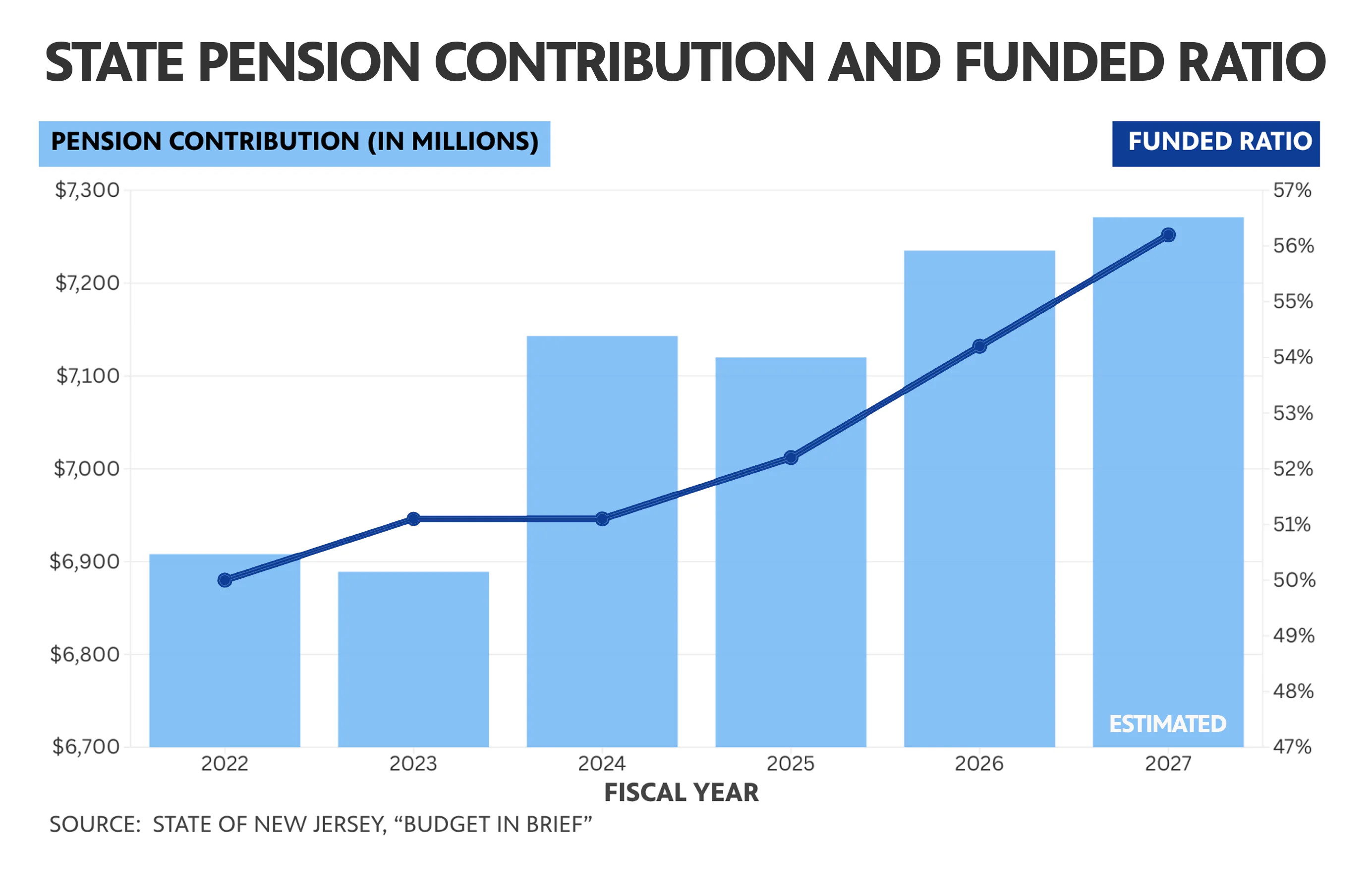
Those strong returns allowed the pension fund to take full advantage of another year of full funding by state government of its annual employer obligation, which now totals more than $7 billion, counting legally required contributions from the New Jersey Lottery.
“Very good job here,” said Deepak Raj, the investment council’s chair, as state officials went over the latest return estimates during the meeting.
“I think this should give us comfort that we’ve been able to do well in this exceptionally volatile environment,” Raj said.
However, investment gains recorded over the first quarter of the current fiscal year, which began July 1, reflect more unfavorable market conditions. Returns totaled less than 1% through the end of September, according to the preliminary estimates.
State officials suggested it’s still early in the fiscal year, and also pointed to the upcoming midterm elections, which can trigger uncertainty that dampens returns, at least in the near term.
Protests over investment choices
Market volatility isn’t the only concern facing the state’s pension managers. Investment council members on Wednesday also continued to be pressed by numerous members of the public who want to see the pension fund shed investments in both Israeli bonds and the Palantir technology firm involved in the federal government’s immigration enforcement efforts.
Many of those offering testimony during a lengthy public comment portion of the meeting cited human rights concerns as they pressed for divestment. They pointed to Israel’s ongoing treatment of the Palestinians in Gaza and the West Bank, and Palantir’s role as a federal contractor participating in President Donald Trump’s hardline immigration crackdown as they echoed criticisms that have been aired repeatedly during prior investment council meetings.
“We are not mandated to invest in Israel,” said Abdul Rehman Khan, a law professor at Seton Hall University, as he advocated for divestment of the pension fund’s Israeli bond holdings.
“Throughout history, when international governing bodies fail, states and localities have stepped up,” Khan said.
This was not the first time the investment council has heard criticism about some of the pension fund’s individual holdings. For years, environmental activists have questioned the value of fossil fuel investments in testimony before the investment council and also lobbied state lawmakers to mandate a selloff of those assets.
Pensions for more than 800,000
New Jersey’s more than $86 billion pension fund covers the retirements of more than 800,000 current and retired government workers in New Jersey, including teachers and judges. It does not cover police officers and firefighters, whose pension investments are managed by a different government entity.
Pension fund assets are managed by the Division of Investment, as well as outside professionals hired by the state.
The investment council doesn’t administer benefits or manage investments on a day-to-day basis, but instead plays an administrative role in formulating policies governing fund investments. Council members serve as volunteers, with some appointed by the governor and legislative leaders, and others representing labor organizations and other retired workers.
When state fund managers generate strong returns, that can help ease pressure on taxpayers who also boost the retirements of public workers on a regular basis through employer contributions included in state government’s annual budget.
Good year on Wall Street
The 2026 fiscal year marked the fourth straight year of net returns besting the pension fund’s assumed rate of return, this time by 7.82%.
The net returns totaled nearly 11% during both the 2025 and 2024 fiscal years, and 9% during the 2023 fiscal year, according to Division of Investment data.
State officials cited the pension fund’s diversified portfolio as a key factor, noting all asset classes generated net positive returns during the 2026 fiscal year. Among the standouts, though, were emerging markets, +39.53%; U.S. equity, +23.20%; and international developed market equity, +21.61%, officials said.
Over the last three fiscal years, the pension fund has achieved an annualized return topping 12%, they said.
At the same time, state policymakers have also been working together over the last six fiscal years to maintain full funding of each annual employer contribution for state government, a streak Gov. Mikie Sherrill worked with the Legislature to continue this year, her first year in office.
That practice, started by former Gov. Phil Murphy, reversed a longstanding state government policy of shorting annual pension contributions, an oft-criticized habit that dated back more than two decades.
“The strong results over the past three years, along with the administration’s commitment to making the full payment, represent a huge step in returning the pension fund to solid ground, and helps protect the pensions of the hard-working men and women who rely on it in retirement,” state treasurer Aaron Binder said in a statement issued Wednesday.
Long-term damage
While no retiree has been in danger of missing a pension check, actuaries have estimated it will take decades to undo all of the financial damage caused by state government’s prior underfunding of employer pension obligations.
New Jersey’s more recent pension funding practices, though, were recognized over the summer by KBRA, a New York-based credit-rating firm when it moved New Jersey’s debt grade up one notch, to AA-.
In addition to highlighting overall improved budget management, KBRA analysts also cited New Jersey’s “increasingly well-established track record of full actuarial pension funding” among the key factors leading to the upgrade.
While still several notches below the highest rating offered to bond issuers, KBRA’s current grade for New Jersey is the best state government has earned from that firm since it began issuing such grades in 2015.
“This is great news for New Jersey,” Sherrill, a Democrat, said at the time.