
New Jersey is still trapping families in special education court battles “well beyond” the legal time limit, according to a new judicial report (opens in new tab), leaving scores of disabled children without timely services.
The preliminary findings from former state Supreme Court Justice Jaynee LaVecchia are in response to a 2019 federal class-action lawsuit against the state Department of Education.
LaVecchia was appointed a special master of the court to review the lawsuit’s allegations and recommend next steps. And detailing everything from excessive extensions to judges’ biases, she described the court’s delays as profound.
“Taken together, these preliminary observations suggest that the present system is not exercising sufficient control over the progress of due process cases to keep the hearing, related submissions, and final decision within the time required,” she wrote.
This is a long-running complaint in the special education community, where parents say their kids are denied reading help, language support or specialized aids for months or even years as their cases wind through the court system. More than 800 legal complaints are filed annually in New Jersey, according to lawyers and state records.
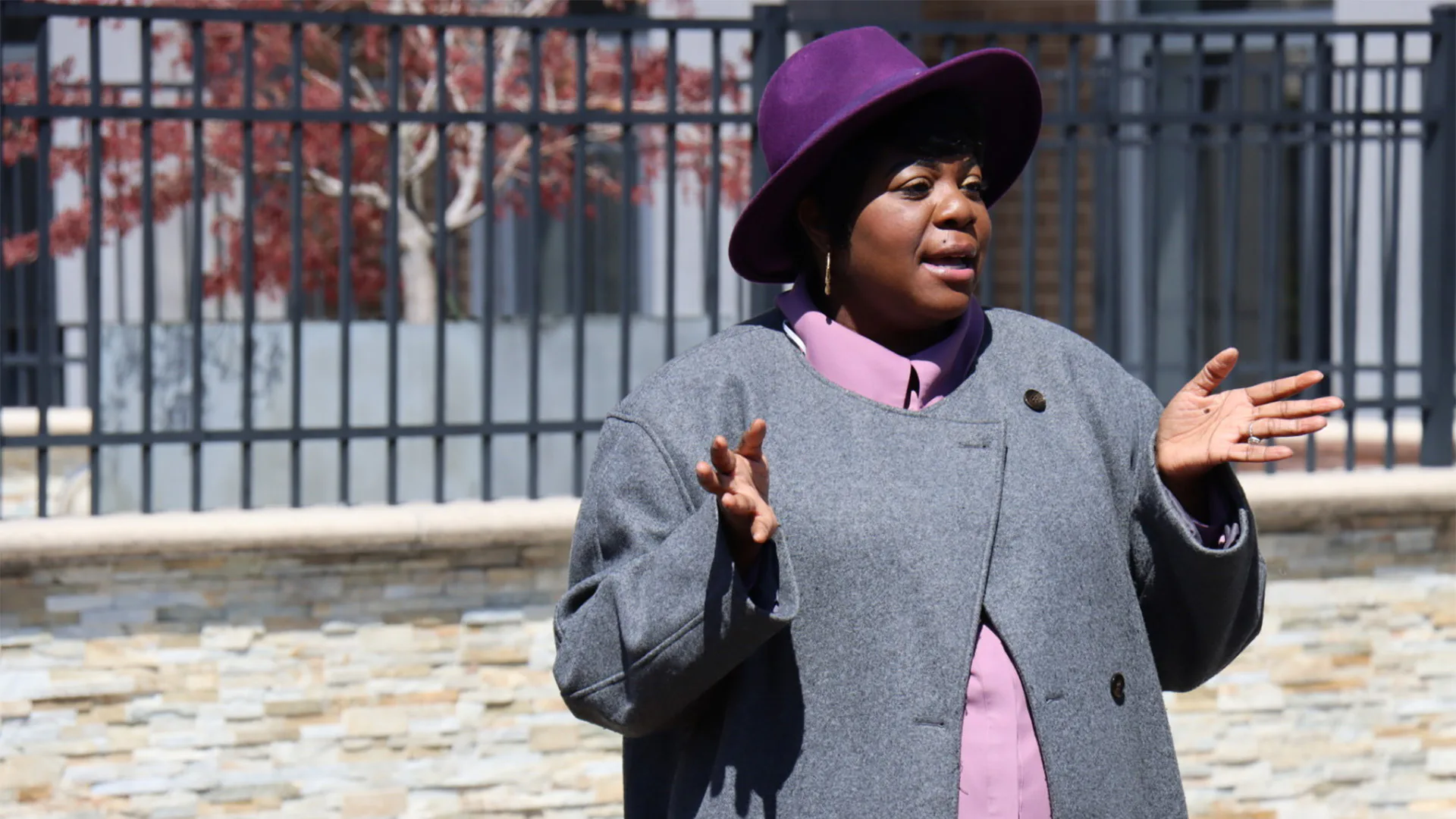
It is a reality East Orange mother Danna Dennis knows all too well. When she took her district to court on behalf of her disabled son, Sammy, extensions granted to district lawyers dragged her case out for at least six months, she said, four to five times the 45-day federal limit.
“Your child is still sitting in this horrible setting,” she recalled. “And everyone is rolling back time.”
Although New Jersey settled the class-action suit in 2024, promising to resolve 95% of special education cases within the 45-day limit under the Individuals with Disabilities Education Act, follow-up checks showed it met that target just 15% of the time.
Special master appointed
In May, a federal judge appointed LaVecchia to investigate the delays and compel New Jersey to follow federal law that lays out specific deadlines for the hearing of cases. So far, she has uncovered systemic failures far beyond the missed deadlines, her first 29-page report said, including:
Failure to build a digital system to track cases and flag illegal delays, even though lawmakers allocated more than $1.2 million over five years for it. The state can’t provide an estimated completion date, she says.
Failure to create a dedicated unit of special education judges required by a 2021 law, despite at least $2.8 million appropriated for the extra judges. This leaves general judges to tackle these complex hearings on as little as two days per month.
The use of unreliable paperwork to track deadlines and sometimes miscalculating them, which hid unjustified delays.
Judges appearing to lead both sides – including parents without lawyers – into agreeing to delays, which was “perplexing, to say the least,” LaVecchia wrote.
Judges being “exceedingly deferential” to school district attorneys, taking their word without verification, accepting delays, and prioritizing attorneys’ schedules over students’ needs.
Judges automatically delaying a hearing simply because school staff are off during the summer, which “was witnessed to an alarming degree.”
The scheduling of live witnesses before less burdensome options like written or remote testimony were considered, and not clearly informing parents about how requests and extensions would change the final deadline.
Failure to provide clear, plain language explanations before the first hearing to parents without lawyers to avoid confusion and unnecessary delays.
The ultimate responsibility for complying with the 45-day rule rests on the state Department of Education, LaVecchia wrote.
The former justice is not yet imposing final fixes, but she wrote that she wants to bring plaintiff lawyers, state education officials and administrative court staff together to develop a plan for reaching 95% on-time decisions.
‘Scathing’ and overdue
State Assemblywoman Dawn Fantasia (R-Sussex) called the report “scathing,” noting that despite $4 million allocated for staff and software tracking, LaVecchia found little to no progress has been made.
The Education Law Center, one of the lead legal groups representing the families, said LaVecchia’s appointment is “a critical step forward,” praising “the deep dive she is taking to identify barriers to compliance.”
“I am also greatly encouraged by her recognition that the system needs to work for the many self-represented parents who advocate for their own children,” said senior attorney Elizabeth Athos, who expects those families will start experiencing benefits “in the weeks and months ahead.”
But while the special master can access state data, she still must ask a federal judge to enforce reform. Attorney John Rue, representing seven original plaintiffs, argued that a previously appointed compliance monitor had the same full access and that any party to the case could ask the judge for a court order.
The agreement between the state and the court-appointed team representing the families – including the Education Law Center – to appoint a special master now shields education officials from contempt for another 18 months, while prioritizing slow, systemic reform over immediate relief for families, he said.
“It’s giving up the leverage to seek contempt to fix the delays right now,” he said. “In exchange for a special master who still has to ask the judge for relief.”
In response, the court-appointed team noted that a federal judge chose this approach after considering all arguments, and that a special master has “authority to enforce compliance” at any time.
Federal data shows New Jersey ranks among the lowest in the nation for special education parents utilizing a free complaint process. They turn instead to these expensive legal battles that cost both plaintiffs and taxpayers who ultimately pay for the district’s lawyers.
A mother’s quest
Ashley Meyer recently described how her autistic son, Jack, has been trapped in a deeply flawed system where overworked judges often lack special ed expertise and defer to school districts.

The Lacey Township mother has represented Jack before the court, and said she has seen cases drag on months or years past the 45-day limit.
Combing through public records, Meyer could not find a single one resolved on time, she said, ticking off delays ranging from 134 to 216 days—and one case that lasted 694 days, nearly 15 times the prescribed limit.
Some families give up out of sheer exhaustion, she said. Others feel pressured to settle during the mandatory pre-hearing mediation periods, something she’s experienced firsthand.
“The judge mentioned, ‘The school’s lawyer is really great. I’m sure this is all going to be just a misunderstanding.’” she recalled.
One judge was audibly frustrated when she refused to settle, she added: “If you really want to come all the way down here and make me put on my white jacket,” she recalled him saying. “You guys can fight it out.’”
So far, state officials and lawmakers have not helped much, either. In the spring, testimony at an Assembly education committee hearing detailed major flaws in the complaint process, but nothing has happened since.
Its chair, Assemblywoman Verlina Reynolds-Jackson (D-Mercer), did not return a call for comment.
Fantasia lamented a lack of urgency among state officials and most fellow committee members, pointing out that children only go through each grade once while adults drag their feet.
“I’m hopeful that this report is … the kick to move this along,” she said of LaVecchia’s findings.
Dennis, the East Orange mother, said the report confirms what families encounter when they try to fight back, plunging into drawn-out, expensive legal battles.
“I had a time where the district’s lawyers asked for three extensions,” recalled Dennis. “By the third one, I flipped out on the judge. I said… ‘You’re being biased. You can’t just give it to them because they ask.’”