
As Tuesday marks the end of voting in the 2026 election, all eyes once again will be on a particular group of voters and where they cast their ballots: the youth.
That only heartens Beth Rubin, a researcher who has been leading a program across dozens of New Jersey school districts, including Plainfield High School, aiming to get teenagers more civically engaged.
“Young people are really deeply invested in their communities, their families, their groups that they’re part of, and that is really the place to begin with thinking about how to engage kids civically,” said Rubin, a professor of education at Columbia University’s Teachers College.
Around the country, young voters have had an increasingly influential role in key elections with nearly 50 million youth ages 18 to 29 eligible to vote in Tuesday’s midterm elections. Those numbers have been more measured in New Jersey, but it’s not from lack of trying.
Advocates say the groundwork for more engaged youth citizenship is only beginning to take root in New Jersey, as the state’s law for mandated civic education beginning in middle school hits a five-year mark and more schools opt for additional voluntary civics programs to get more students engaged.
Additional laws expanding the youth vote at the state and local level could also turn around youth civic engagement in New Jersey, as the youth vote becomes a decisive one in other parts of the country, especially in key races this election year.
“If you have strong feelings about politics or something that’s going on in your small town, you need to go vote, make your voice heard and say what you feel, because if you don’t, there will never be any change,” said Power Chiles, a 17-year-old Plainfield High School senior who participated in his school’s youth civics program. “That’s definitely something I want to do when I get the chance.”
In New Jersey, engagement appears to have moved at a slower pace, as voter registration among the 18- to 29-year-old demographic dropped by 5% and by nearly 40% for newly eligible voters compared to rates in the 2022 midterm election.
Those figures are based on voter registration data as of Oct. 19, according to the Center for Information & Research on Civic Learning and Engagement (opens in new tab), a nonpartisan Tufts University research group that focuses on youth civic engagement.
Not just about voting
Rubin has led the Civically Engaged Districts Project since 2017, an effort to support youth civic development in New Jersey school districts, particularly those that have been historically underserved.
The project started with just two districts, but after former Gov. Phil Murphy signed into law required civic education for middle schoolers beginning with the 2022-23 school year, interest in the project and other similar efforts in the state has grown significantly.
The project is also part of CivicsNJ, a statewide coalition of organizations, foundations, and other school stakeholders that formed in 2024 to create a unified effort.
Statewide, 10,000 students across 45 school districts have participated in the Civically Engaged Districts Project, providing professional development, training and resources for K-12 teachers, mostly in social studies. The aim is to help their students create youth-led, classroom-based research on issues they care about.
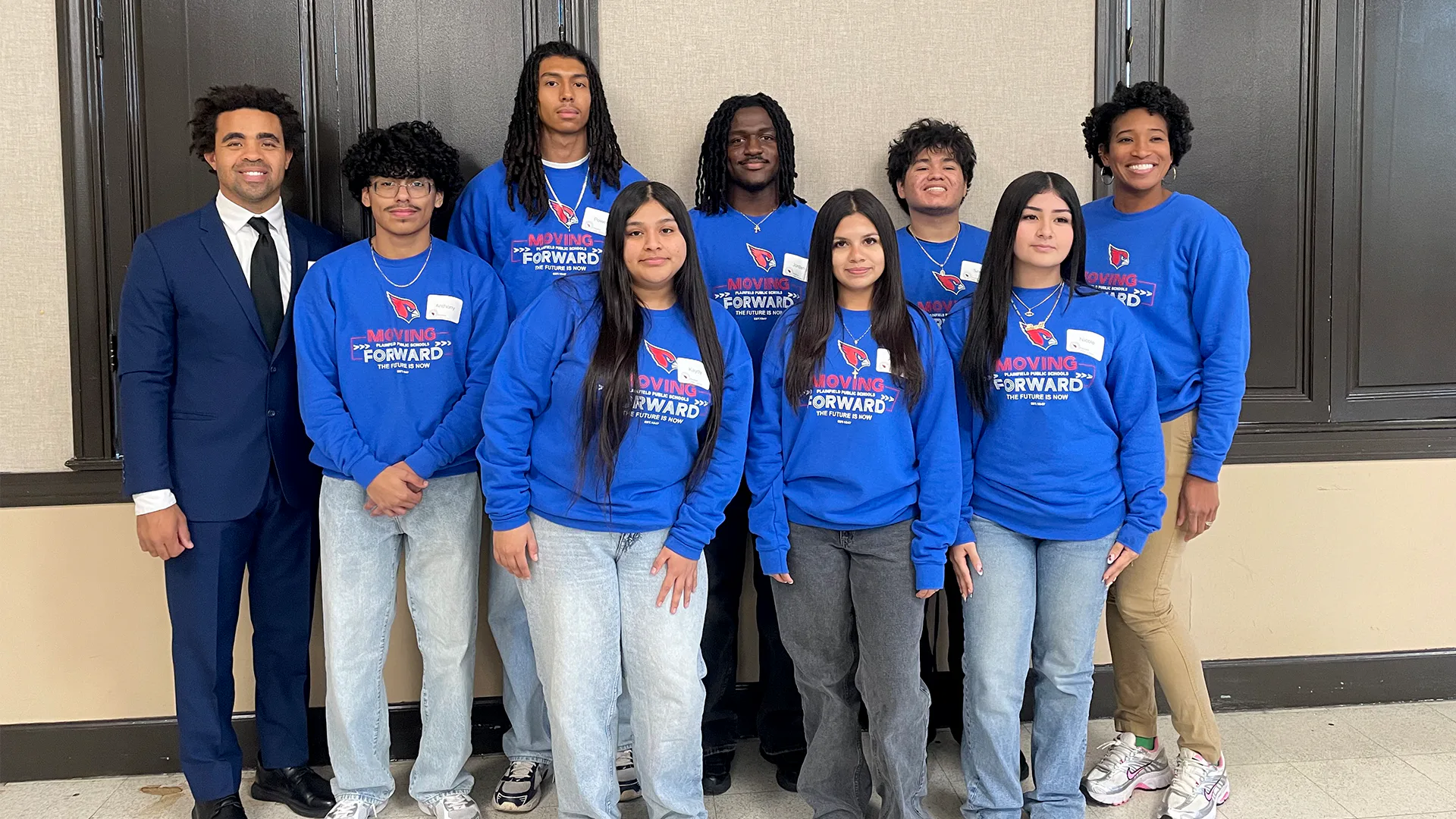
A group of Plainfield High School sociology students recently participated in the project and focused on finding solutions to the low literacy rate in their district. In the 2024-25 school year, just 24% of students in that district were proficient in reading, based on statewide assessment results.
“We noticed that students want to read, but they don’t have the motivation to read,” said Kaydy Acetun, an 11th grader at Plainfield High School who helped present her group’s research findings last week at Rutgers-New Brunswick to 90 educators across 36 school districts. The teachers were there for training to implement the project in their classrooms.
Over seven months last school year, the group of Plainfield students conducted student surveys and interviewed students about their disengagement with reading, and then developed an action plan with potential remedies. They’ve already met with administrators, educators, and school board members to discuss their findings, and next up, the students plan to partner with the board’s curriculum and instruction committee to expand reading choices and access.
“I feel like this will definitely play a really big part in what I want to do in the future, even in the near future,” said Chiles, the Plainfield High School senior who is also a student commissioner on the board. “This just gives me more insight on how I can reach out to more students and see what their complaints or views on things are, so I can actually continue on making more changes in improving their day-to-day school life.”
While the project doesn’t focus on voting alone, the students said they get first-hand experience on what civic engagement looks like in their school community and how they would apply that to life starting now, well before they’re eligible to vote.
“Young people are citizens of the now,” Rubin said. “They’re not just in some sort of waiting phase waiting to become citizens. They’re members of their own communities, their schools, their cultural groups, and they can act and be civically engaged on the issues that they care about.”
Lower voter numbers so far
Voter registration among New Jersey’s youngest eligible voters, age 18 and 19, dwindled by 37% for this year’s midterm election compared to the previous 2022 midterm, according to Circle, the Tufts University research center. That is in contrast with much of the rest of the country, where Circle found 19 out of 22 samples states had seen increases.
Currently, there are 50 million 18- to 29-year-olds eligible to vote in Tuesday’s election, said Elizabeth Matto, director of the Eagleton Institute of Politics at Rutgers University, at a virtual event (opens in new tab) earlier this month focused on youth representation in elected office.
“The power of Gen Z’s vote really tracks with what we know about the millennial generation that came before them,” Matto said. “At about 72 million, millennials have really outpaced the size of the baby boomer generation. A force to be reckoned with.”
Still, there has been a 5% decrease in registered voters among the 18- to 29-year-old cohort in New Jersey compared to the prior midterm, according to Circle’s data.
“These generations are the most diverse generations in American history, facing unique economic, social, and political challenges, [and] paying deep attention to politics,” Matto added. “But also deeply uncertain about the state of politics and democracy.”
Based on September registration data, about 48% of 18-year-olds are registered to vote out of 58,000 in New Jersey, compared to 82% of voters who are age 45 or older, according to The Civics Center, an advocacy group for youth voting (opens in new tab). That group cites a lack of same-day registration policy or pre-registration at 16 or earlier as reasons for the voter registration gap.
“It feels like my generation cares a lot about the issues going on, but caring about them and actually registering to vote are two different things,” said Saanvi Kulkarni, 18, a Livingston-native who’s now living in Massachusetts as a freshman at Harvard University.
Kulkarni was among the few young voters (opens in new tab) who embraced a New Jersey law that took effect this year that allowed 17-year-olds to vote in a primary race if they turned 18 by the general election. After going away to Harvard, she made sure to submit her absentee ballot to make her vote count in New Jersey, she said.
“I think the registration process can still feel like a hassle, especially in your senior year when things get really stressful,” she said, adding that she supports policies for registration starting at a younger age and same-day registration. “I also don’t think a lot of my friends realized they’ll need to re-register or submit an absentee ballot when they went away to college.”
Rubin said the youth civic engagement project doesn’t put a whole lot of emphasis on voting, but rather on how to practice advocacy and other ways of being civically-minded, especially for students who may not get the right to vote any time soon.
“Voting is super important, but we’re focused on supporting students to become the kinds of compassionate, creative, engaged citizens that we want beyond the ballot box,” Rubin said. “There are lots of kids in New Jersey schools who don’t have legal status, so voting is not going to be an option, but they can still be civic participants.”
What teens think about
The high cost of living, lack of support for unhoused populations, expensive medical insurance, and an increase of federal immigration enforcement in their neighborhoods are among some pressing issues Plainfield student participants in the literacy project raised when discussing issues they care about beyond their school walls.
“I feel like right now the economy’s really bad and there’s millions of people who do not have the proper necessities to live a good life,” said Nicole Ramirez, 16. “If you can vote you should, because every voice matters and it affects the future and everyone younger than you.”
For Saul Salazar, 16, another student involved in the Plainfield literacy project, an important cause to him is more support for immigrants who are in search of better opportunities.
“There are a lot of immigrants that come here from their country, sacrifice everything to work hard and have new opportunities,” Salazar said. He added that he believes there should exist programs to support those efforts by helping immigrants “find new job opportunities, so they can succeed, live comfortably. That would be something I’d want to change.”