
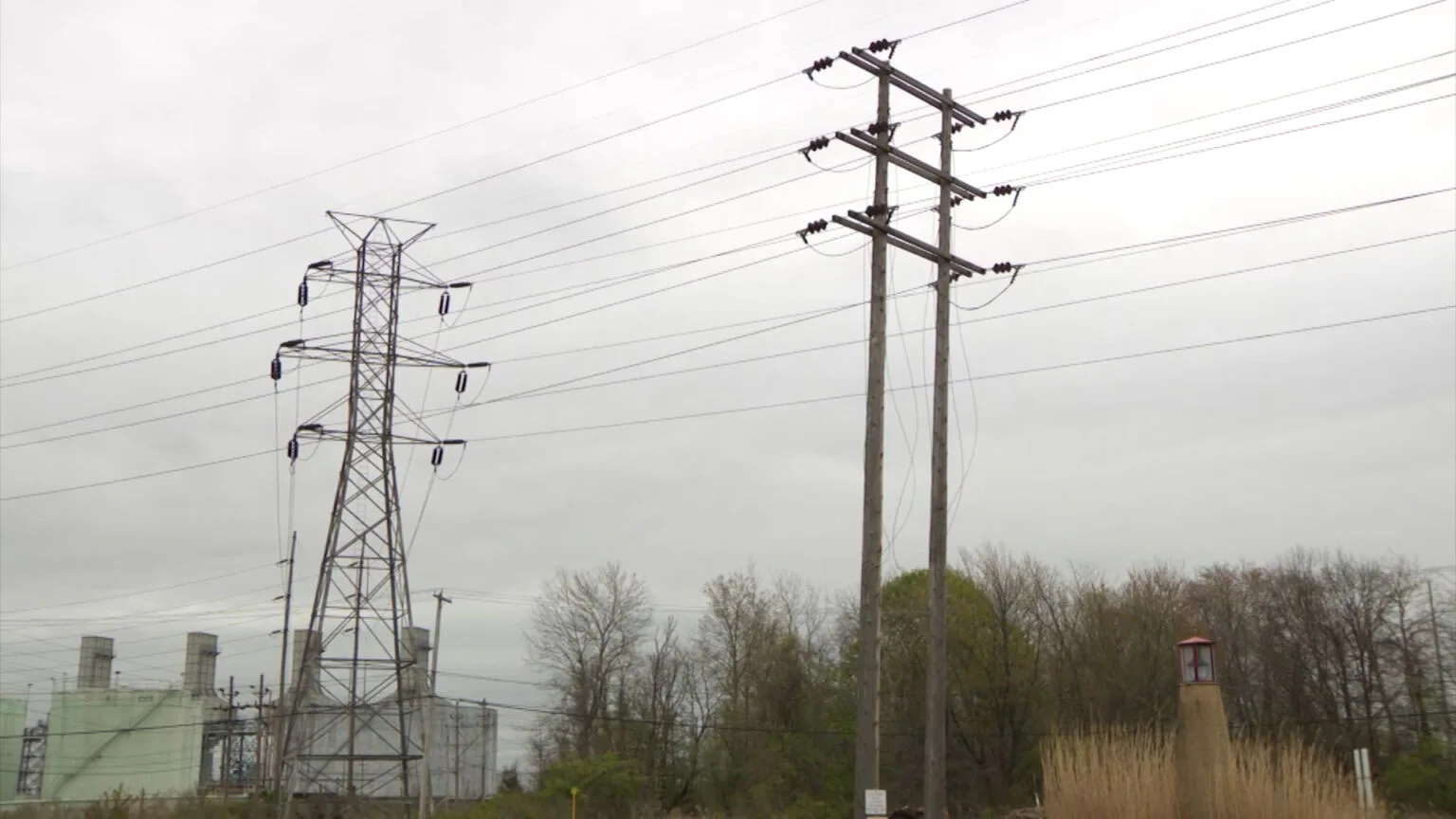
WASHINGTON — The bill would appear to many as a no-brainer for climate-conscious Democrats, allowing for the transmission of clean energy from wind farms in the Plains to the heavily populated pockets of the country like the Northeast.
But in a political twist, many of those same Democrats have proven to be some of the bill’s biggest critics, raising questions about exemptions for data centers, tribal opposition and threats to foundational federal environmental statutes like the Clean Water Act.
After a series of procedural votes, the Senate on Wednesday voted 65-31 to end debate on the legislation, with New Jersey’s Sens. Cory Booker and Andy Kim, both Democrats, each voting no.
“I wanted us to have a real debate about this, but I definitely don’t see everything that I wanted to see right now,” Kim told reporters at the Capitol on Tuesday before voting against the measure.
Kim said he was concerned about environmental protections, tribal input and had “questions about ICE detention facilities” in connection with the bill. Booker himself raised concerns that the bill has too many loopholes.
“I respect the work done on this bill with the goal of accelerating clean energy and building out our grid, but I do not believe it meets the mandate voters have charged us with to put a check on the corruption, chaos and cruelty of Trump’s administration,” Booker said in a statement, noting elements of the bill to eliminate environmental safeguards.
Easing transmission
At its core, the legislation — dubbed by sponsors as the Bipartisan American Affordability and Jobs Act (opens in new tab) (S.5653) — would accelerate the federal permitting process for energy projects, including electric transmission lines that are the vital sinew of power grids that bring electrons from where they are made to where they are consumed.
“It’s really awesome for transmission,” Nadine Sapirman, a volunteer with the Citizens’ Climate Lobby, a climate advocacy group, said in an interview with NJ Spotlight News.
In their advocacy, Sapirman and fellow supporters of the bill cite a growing backlog of renewable energy projects to receive approval and start operations.
“This bill would cut down on the time it takes to build a wind farm, to build a transmission line” by years, said Sapirman.
She traveled to Capitol Hill from New Jersey to lobby Congress in favor of the bill, arguing regions like the Great Plains, where wind power is strong, present a great opportunity for the country. “Hopefully we can get the electrons from where they’re generated to where they’re needed,” she said.
Electricity demand is only growing, and Sapirman said renewables, not fossil energy, can meet that demand. “We are as a country electrifying more,” she said. “This would be a really, really big climate win.”
Yet the hitch with some Democrats is that the legislation would also allow for the faster construction of oil and gas projects, a non-starter for many in the party, and it would weaken legal protections for tribes, states and local communities by revising bedrock federal laws.
“It turns the faucet wide open on more fossil electrons,” said Sen. Jeff Merkley of Oregon in a floor speech Tuesday.
In particular, the permitting bill would alter the text of the Clean Water Act, the Endangered Species Act and the National Environmental Policy Act, the federal statute that regulates permits.
Environmental groups’ misgivings
Jim Walsh, policy director at Food & Water Watch, a national environmental group, said the bill could increase renewable electricity production in the country.
But it could also boost production of fossil energy projects, oil, gas and coal, further exacerbating human-made climate change. Instead of trying to ramp up renewable energy, he said the focus should be squarely placed upon zeroing out fossil sources.
Earth’s climate is sensitive to added greenhouse gas emissions. “It cares about whether we are trying to phase out or expand fossil fuels,” Walsh said in an interview.
A last-minute amendment adopted on Wednesday would provide exemptions to data centers, allowing them to install gas-powered turbines on their sites without notice, according to Merkley.
Still, an unusual collection of allies — from Senate Republicans and the White House on the political right to clean-energy firms and some climate hawks on the left — has amassed sufficient support to get the bill over its first significant hurdle: achieving 60 votes in the Senate.
That threshold is required to overcome the Senate’s filibuster, the procedural rule that requires a supermajority of senators to proceed on most legislation.
Final passage in the Senate is expected in the coming days, and the House has three legislative weeks scheduled before this Congress ends. If approved, the legislation would also need President Donald Trump’s signature.
Trump has said he supports the bill, as does the American Petroleum Institute, a federal trade group for oil and gas firms.
National organizations including the Sierra Club, the Natural Resources Defense Council and the NAACP oppose the bill, as does the National Congress of American Indians, the largest and oldest Native advocacy group in the U.S.
Booker is one of several potential 2028 presidential candidates to vote against the measure, including Democrats Mark Kelly and Jon Ossoff of Arizona and Georgia, respectively, and Missouri Republican Josh Hawley.
“I am particularly concerned that the legislation would eliminate the courts’ authority to block the administration’s illegal projects, including ICE detention centers,” Booker said in a statement. “As written, the bill would weaken bedrock environmental laws and strip away important tribal sovereignty protections. For all of these reasons, I cannot support the bill in its current form.”
While final passage in the Senate is likely, passage in the House is uncertain.
Rep. Frank Pallone (D-6th), an influential voice on environmental policy, told reporters last week he had problems with portions of the text. “I have continued to try to do more for the protection of the environment and also address the tribal concerns,” Pallone said.
Before you go, a request for help…
NJ PBS is entering a dynamic new chapter; operating out of Montclair State, we're delivering state-of-the-art public reporting while training New Jersey's next generation of journalists, storytellers, and technical leaders alongside seasoned media veterans–in addition to streaming your favorite shows!
Because we operate as an independent entity and can no longer rely on federal subsidies, our strength and sustainability rest directly with you.
Will you join us in building the future of New Jersey public media? Your year-end contribution directly funds our independent newsroom, fuels homegrown Jersey storytelling, and equips future media leaders.
Donate to the NJ PBS Year-End Fund (opens in new tab)