
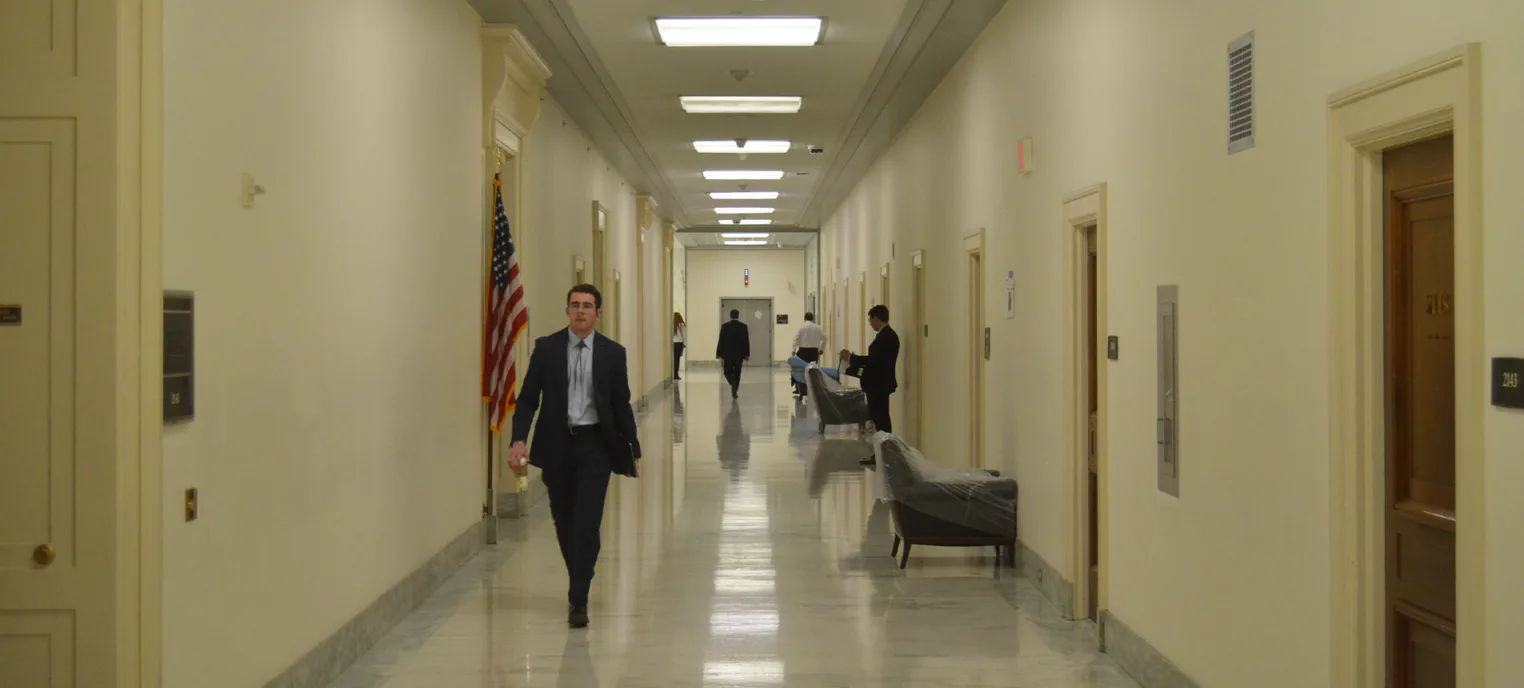
WASHINGTON — Just as Chris Smith was leaving the House floor on Monday night, Andrew Garbarino, a Republican congressman from Long Island, pulled Smith back into the chamber with a question.
Garbarino brought up the House Republicans’ steering committee, a private panel that determines committee assignments based on closely-held factors that include geographic region and seniority. Democrats have a comparable process.
“You got me?” asked Garbarino, seeking the Ocean County congressman’s support in the steering committee process.
“Put me down,” Smith replied.
Austin Pfluger of Texas and Julie Fedorchak of North Dakota, both Republicans, would soon flag down Smith in quick succession as well.
After Election Day, when Democrats trounced Republicans and set themselves up to hold comfortable House and Senate majorities in the new Congress, Capitol Hill is in a full-swing transition this week.
“There was a blue wave, anyone who says there wasn’t, I’ll sell you the Brooklyn Bridge,” said Smith, who has represented a New Jersey district since 1981, said in an interview with NJ Spotlight News.
Democrats flipped at least 45 House seats, including two in New Jersey, and seven Senate seats. One New Jersey Republican who lost his seat, Jeff Van Drew, told reporters at the Capitol on Monday night he would likely run for re-election in 2028.
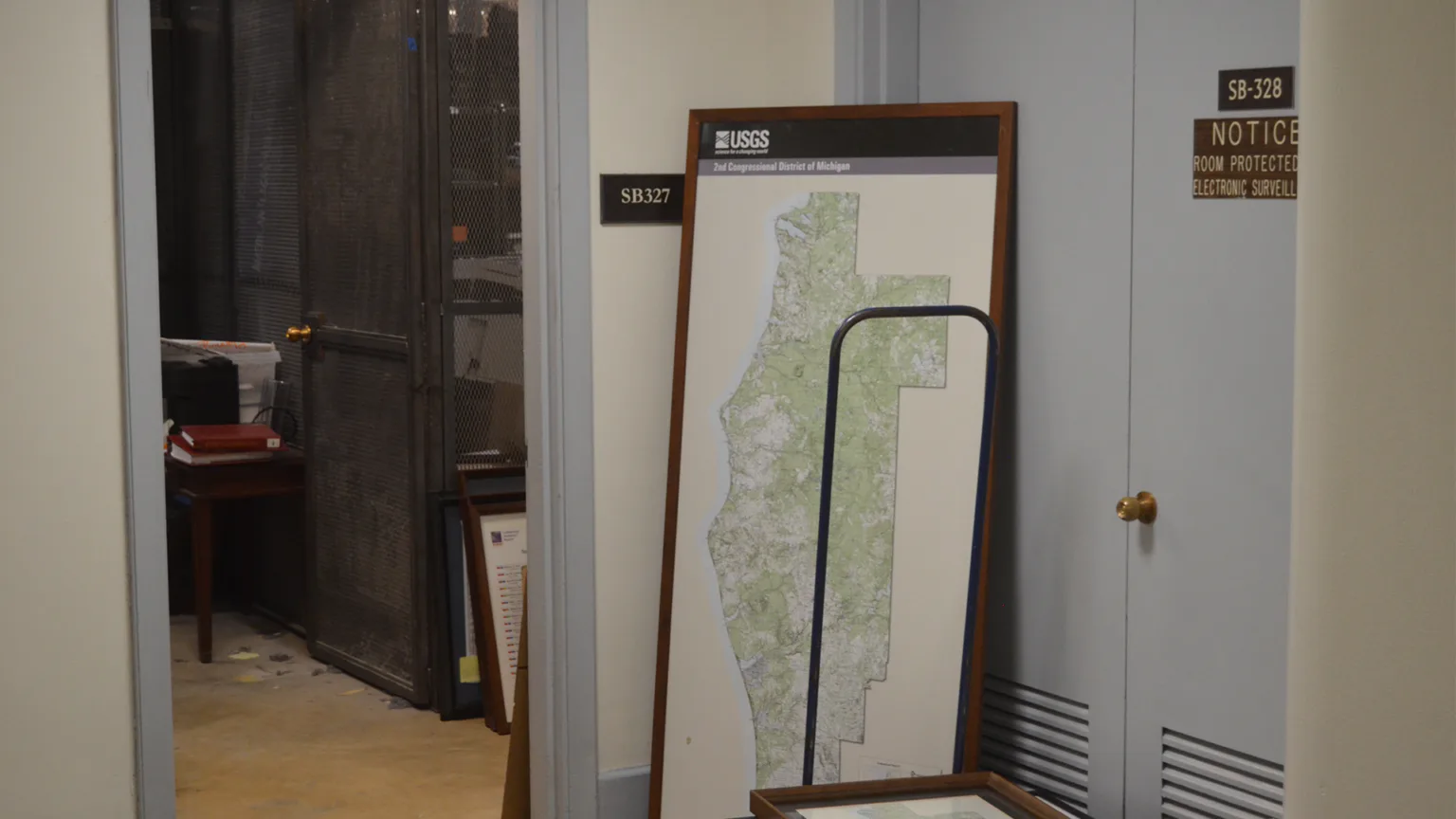
To accommodate the freshman class for the 120th Congress, custodial staff in the Capitol and its adjoining buildings started moving furniture, supplies and personal belongings the day after Election Day, based on which congressional races had been called.
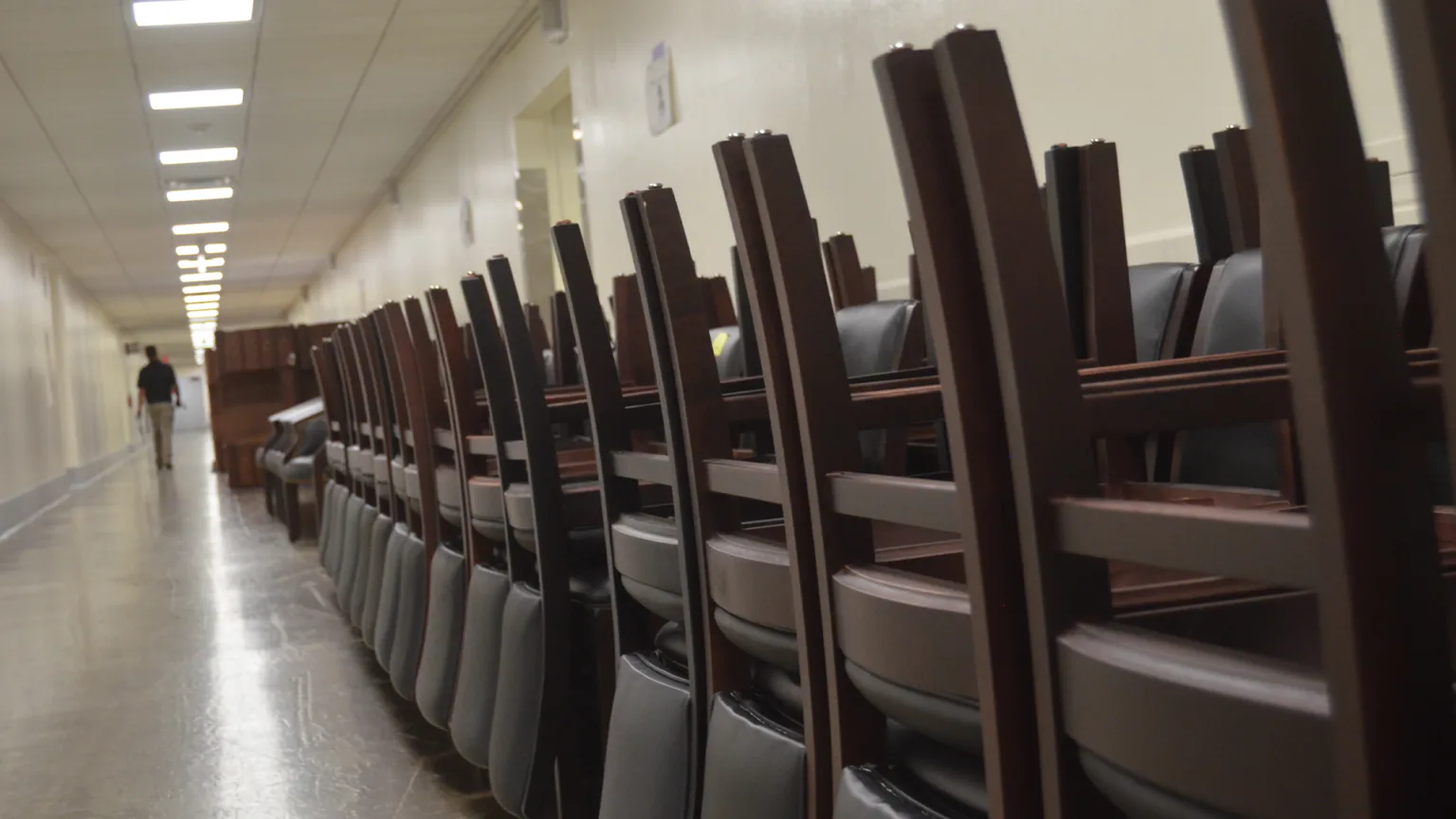
Now, bold-lettered signs populate the Capitol complex, a honeycomb-like network of offices, basements, sub-basements, tunnels and the Capitol itself, directing the incoming class of first-time lawmakers where to go for orientation.
“Probably I know less than any elected official in that building,” Zack Mullock, the Democrat who beat Van Drew, told reporters over the weekend. “I had to Google the salary of a Congressperson a few days ago.”
Incoming New Jersey Democrats Rebecca Bennett, who defeated incumbent Tom Kean Jr., and Adam Hamawy are going through the same process as Mullock. Hamawy won election to New Jersey’s 12th Congressional District, which outgoing Democrat Bonnie Watson Coleman currently occupies.
On Monday night, the shelves and desks were sparse in the office of Rep. Analilia Mejia (D-11th), who is changing offices between congresses.
Mejia, who first won her seat this spring in a special election, was envious of the camaraderie a group provides.
“Having a class is important,” Mejia said in an interview with NJ Spotlight News.
When she was sworn in on April 20, Mejia entered Congress alone, the only new member at the time after Gov. Mikie Sherrill vacated the seat to become governor. The new wave of freshman may provide something Mejia, who called herself a “freshman-plus,” said she’s missing.
“I could already feel that I’m going to have an opportunity to collaborate and have thought-partnership with this cohort in a way that I didn’t know I was missing,” she said. “I haven’t had that, and I didn’t realize how desirous I was of it until yesterday.”
Once their races are called, defeated members receive office space in the cafeteria of the Rayburn House Office Building, where a warren of gray, numbered cubicles with high walls was erected. There is still constituent work to be done in the current Congress, so staffers are inside, manning the phones.
Meanwhile, politicians who won reelection have started the process to switch offices. A hand-out for new members includes options for paint colors including “House Cream”, “House Light Blue” and “House Taupe.” House members who will become senators in January have begun the trek across Capitol Hill to their new digs.
Those who won last week will get assigned offices through a lottery draw next week.
Others, like Rep. Frank Pallone (D-6th), are campaigning again — this time to lead committees, like Energy and Commerce in the House, which Pallone chaired during the Biden administration.
In a statement about the incoming Democratic-majority Congress, Pallone said the committee would pursue investigations and legislative work with him at the helm.
“We will advance policies that lower costs, expand access to quality and affordable healthcare, protect consumers and the environment, prioritized clean energy and rein in Big Tech,” Pallone said. “The days of [President] Trump getting a free pass are over as Democrats will investigate the widespread and blatant corruption that’s ripping off the American people.”
In an interview with NJ Spotlight News on Tuesday, Pallone said the public viewed members who lost as soft on the Trump administration.
“I think the public was tired of Republican enablers,” Pallone said. “People don’t like Trump’s policies because he’s not addressing affordability and he’s corrupt and there’s no accountability.”
Political ladder-climbing aside, work remains in the current Congress, small and big. Deadlines to fund the U.S. government into the new year and pass the sweeping legislation called the “Farm Bill” loom. The Republican-majority Senate has until the end of December to confirm judicial nominees and federal appointments, before Democrats take over in the new year.
And anyone with a standalone bill is racing to shepherd their bills through the House and the Senate and into law before year’s end. After that point, legislation would have to begin again.
For example, the House is scheduled to vote this week on bills from Mejia and Reps. Rob Menendez (D-8th) and LaMonica McIver (D-10th). Mejia’s bill concerns funding for disaster relief. Menendez’s bill deals with pay for Nuclear Regulatory Commission staff, while McIver’s legislation would direct changes at the Small Business Administration.
Smith, soon to be the last Republican in New Jersey’s delegation, has plenty of unfinished business. For one, he wants to get a fresh authorization for a federal anti-human trafficking law through the House and Senate.
When he first arrived in Washington in 1980, Smith went through orientation, too. “We had just what they’re getting,” he said this week, recalling how members at the time mistook him, then a fresh-faced newcomer, for an elevator operator in the Capitol. “You kept pinching yourself to make sure it was real.”
A Republican consultant told him his clothes did not help. “He goes, ‘Chris you look like you’re running for student council president, will you get a dark suit and button-downs?’
Smith gestured to his shirt collar: “And I’ve had dark suits and button-downs ever since.”
Ranked by seniority, Smith is No. 2 in the House, behind Hal Rogers of Kentucky. He has seen his share of wave elections, from 1994 when Republicans cruised to power, to the Democratic wave in 2008 and the anti-Obama backlash in 2010.
“It reminds me of when Obama lost 63 seats,” Smith said of these midterm elections. “There were people on our side of the aisle who said, ‘We got it for a generation.’ I said, ‘No, we don’t!’
Before you go, a request for help…
NJ PBS is entering a dynamic new chapter; operating out of Montclair State, we're delivering state-of-the-art public reporting while training New Jersey's next generation of journalists, storytellers, and technical leaders alongside seasoned media veterans–in addition to streaming your favorite shows!
Because we operate as an independent entity and can no longer rely on federal subsidies, our strength and sustainability rest directly with you.
Will you join us in building the future of New Jersey public media? Your year-end contribution directly funds our independent newsroom, fuels homegrown Jersey storytelling, and equips future media leaders.
Donate to the NJ PBS Year-End Fund (opens in new tab)