
New Jersey’s reputation as a tough place to run a business was burnished earlier this year when it landed dead last in a closely watched ranking of all 50 states in the category of business friendliness.
The tough assessment, issued by the CNBC television network as part of its America’s Top States for Business 2026 report (opens in new tab), highlighted top-end income tax and business tax rates levied in New Jersey that are at or near the highest in the nation.
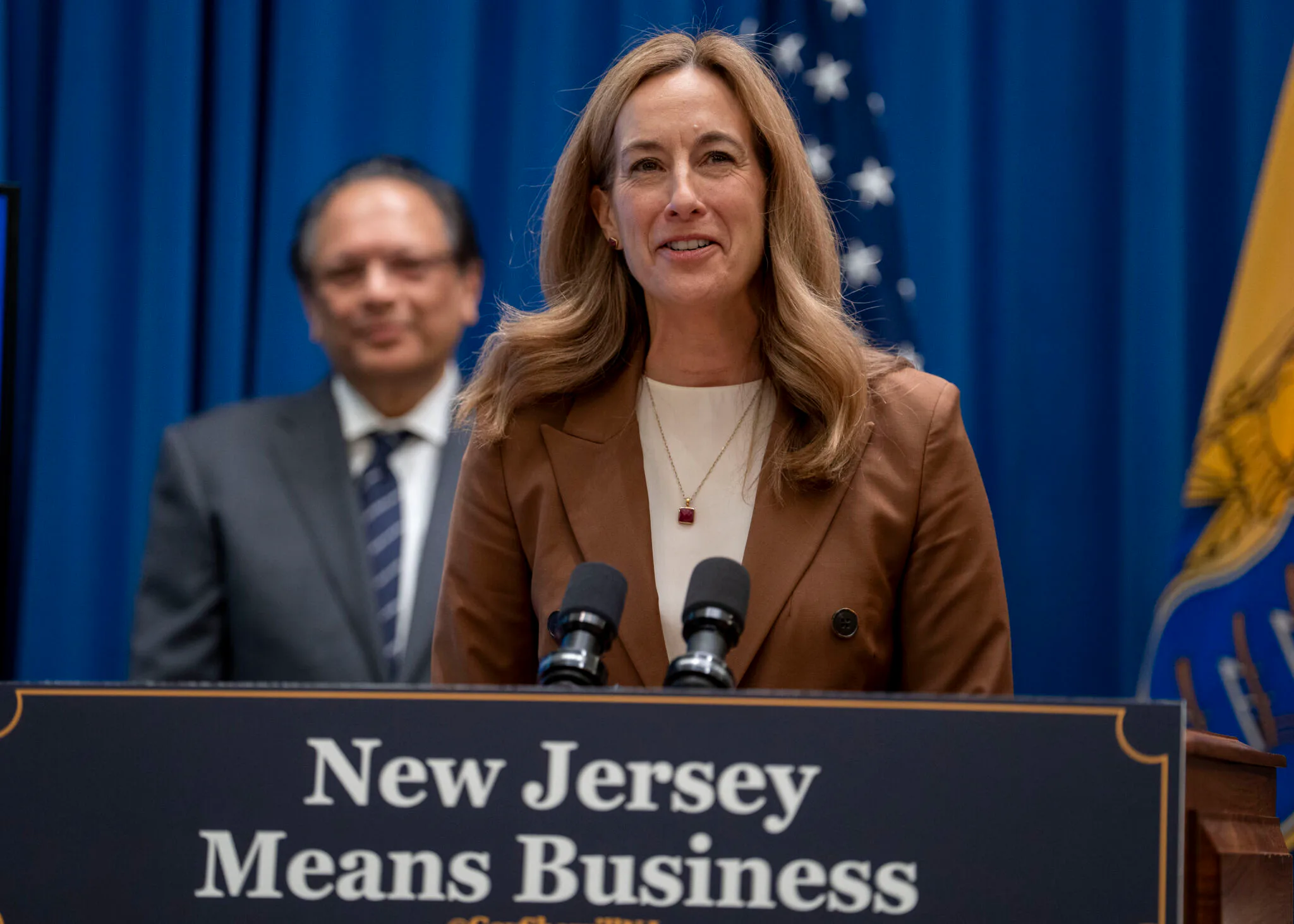
Earlier this week, Gov. Mikie Sherrill mentioned that poor showing as she rolled out a new economic development strategy for the state.
“It all starts with our business climate,” Sherrill said during a State House news conference.
“For too long, Trenton has treated businesses like compliance risks. As a result, CNBC has ranked New Jersey last in the nation for business friendliness,” she said.
To help address concerns about New Jersey’s business climate, Sherrill, a first-term Democrat, said her plan will focus on several key goals, such as boosting innovation through enhanced research and development initiatives and emphasizing economic sectors where New Jersey already has a strong footing.
Another part of the plan, which is spelled out in detail in an executive order (opens in new tab) signed by the governor on Tuesday, looks to build on efforts already well underway within her administration, including the streamlining of state permitting processes.
Despite its reputation, New Jersey already offers numerous economic development tax incentives through the Trenton-based Economic Development Authority. In recent years, state-funded film and digital media tax credits have also led to increased spending on media productions across New Jersey that state officials often tout as an economic development success story.
‘Whole of government effort’
But Sherrill said she also wants New Jersey to foster more widespread and inclusive economic development triumphs, including in communities with persistent financial hardships.
“This whole-of-government effort will help us build on our strengths as we compete for new investment and ensure economic growth translates to real opportunities for families across our state,” Sherrill said of her new plan.
The governor’s “New Jersey Means Business” plan drew immediate praise from several leading business groups, including the influential New Jersey Chamber of Commerce.
“We are encouraged by the administration’s commitment to making New Jersey more business-friendly and competitive,” said Tom Bracken, the Trenton-based organization’s president and chief executive officer.
It was Bracken who earlier this year highlighted New Jersey’s last-place grade in CNBC’s business friendliness category, saying at the time that it was a “distinction no state should accept.”
“We join the broader business community in looking forward to partnering with the (Sherrill) administration to turn this strategy into meaningful action and measurable results,” Bracken said Tuesday.

Good times, for now
To be sure, Sherrill has issued her plan at a time when New Jersey has enjoyed some modest gains across several different economic metrics.
This includes improving state tax collections, a stable unemployment rate and personal income growth that has outpaced the national rate in recent months.
And in CNBC’s overall rankings, which also graded states in some categories New Jersey fares much better in —– including quality of life, 3rd best, and education, 2nd best —– the Garden State came in 31st out of 50.
Still, Sherrill also faces some stiff headwinds as she becomes the latest New Jersey governor to pursue the goal of making the state more business friendly.
Her effort comes less than a year after only 6% of respondents to the New Jersey Business & Industry Association’s annual business outlook survey said New Jersey has a better attitude toward business than other states.
Business’ exit door
Meanwhile, New Jersey has also suffered through several high-profile corporate departure announcements since Sherrill took office in January.
Among them is the planned relocation of Burlington Stores from New Jersey to Pennsylvania after decades of maintaining its corporate headquarters in Burlington County —– many of them under the Burlington Coat Factory branding.
For its part, the state Senate’s Republican caucus has begun highlighting these and other economic setbacks that have been announced during Sherrill’s tenure in a ticker that is running nonstop at the bottom of its website (opens in new tab).
The same GOP website also promotes some of the economic proposals that its own caucus members have put forward in recent weeks.
Among them is a plan backed by Sen. Michael Testa (R-Cumberland) that calls for a staged reduction of the state corporation business tax, or CBT, rate paid by many employers in New Jersey, from 9% to 2.5%.
The same plan also calls for eliminating ahead of schedule an extra surcharge that some of the most profitable companies currently pay to help fund NJ Transit, the perennially cash-strapped statewide bus and rail agency.
“New Jersey’s business taxes are among the highest in the nation and that puts us at a serious disadvantage when it comes to attracting new employers and keeping existing businesses here,” Testa said in a news release issued last week to promote his plan.
“We cannot keep asking businesses to pay more while wondering why they take their jobs and investment elsewhere,” he said.
NJ’s tax rankings
Right now, New Jersey’s top-end CBT rate totals 11.5%, counting the extra surcharge benefitting NJ Transit that is only paid by companies with more than $10 million in net annual income.
That’s the highest such rate in the nation, according to the Tax Foundation, a nonpartisan group based in Washington, D.C. that each year issues state-by-state tax competitiveness rankings (opens in new tab).
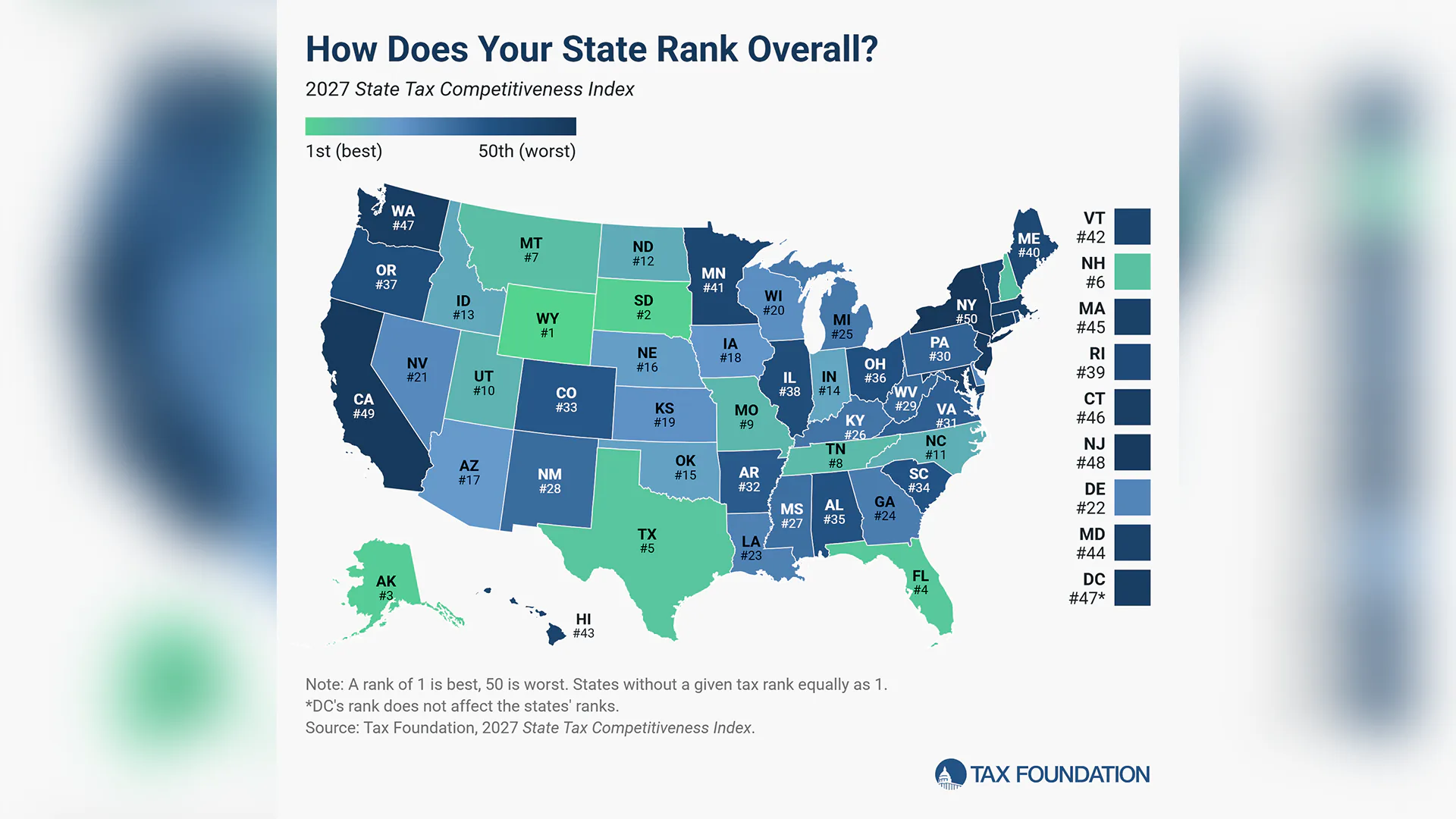
New Jersey’s 10.75% top-end income tax rate is also highlighted in that group’s latest rankings, which were released earlier this month, as among the highest in the nation. And a report issued along with the Tax Foundation’s rankings notes businesses here also pay New Jersey’s notoriously high property taxes.
Overall, New Jersey was ranked 48th in tax competitiveness, putting it alongside states like New York and California that “tend to have a number of issues in common,” according to the report.
“New Jersey, for example, is hampered by some of the highest property tax burdens in the country, has the highest-rate corporate income tax in the country, and has one of the highest-rate individual income taxes,” the report said. “Additionally, the state levies an inheritance tax and maintains some of the nation’s worst-structured individual income taxes.”
Without identifying many specifics, Sherrill’s executive order does call for a review of state taxes and fees.
The same section of her order also suggests that “administrative processes, duplicative or unnecessary procedural burdens, financial requirements” and several other related items should be assessed. It also requires that the state government’s chief operating officer recommend to the governor “legislative, policy, or other changes to reduce business costs and delays.”
Business pushback
But critics of the governor note it was Sherrill herself who signed into law earlier this year several bills that codified cost-raising changes to business tax policies over objections raised by the state Chamber of Commerce, NJBIA and other business groups.
Among these tax policy changes, which were adopted by Sherrill and majority Democratic lawmakers alongside their fiscal year 2027 spending plan, was the establishment of a new fee levied on private employers that have a large number of workers receiving Medicaid benefits.
That fee, costing as much as $725 per employee, went into effect in July, the same month that CNBC issued its state-by-state rankings.
The broader legislative tax package, which also altered some business tax deductions and credits, is forecast to add hundreds of millions of dollars in new revenue to the state’s bottom line this fiscal year.
In his own first-glance response to Sherrill’s new economic development strategy, Senate Minority Leader Anthony Bucco (R-Morris) —– who voted against the Medicaid fee and other related tax measures —– said, “I don’t see meaningful tax relief or anything that addresses the high cost of doing business here.”
“Our Main Streets are feeling the consequences of a business climate marked by rising costs and too much red tape, so when businesses struggle to stay afloat or decide to leave New Jersey, the impact is felt throughout our communities,” Bucco said.
“It’s time to deliver real results that improve our cost-of-living crisis and make New Jersey a place where businesses want to be,” he said.